Christian
Creation for Adults - Encyclopaedia Book 20
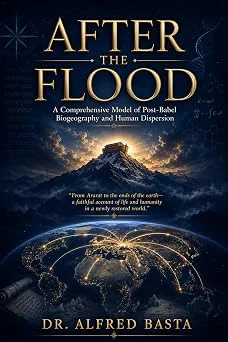
What if the extraordinary distribution of life and humanity across the globe can be understood through the historical framework of Genesis?
In After the Flood, Dr. Alfred Basta presents a comprehensive young-earth creationist model seeking to explain how plants, animals, and human populations could have spread across the world following the Genesis Flood and the dispersion at Babel.
Beginning at the mountains of Ararat, the book explores the proposed mechanisms of post-Flood biological dispersal, including temporary Ice Age land bridges, dramatic changes in sea levels, ecological recovery, and natural rafting across oceanic distances. It examines major biogeographical puzzles involving Beringia, Doggerland, Sundaland, Sahul, Australia, Madagascar, the Galápagos, Hawaii, and other isolated regions.
The discussion then moves from geography to biology, exploring baraminology, rapid variation within created kinds, allopatric speciation, genetic adaptability, ecological transition, extinction, and humanity’s responsibility for stewardship of creation.
A major portion of the book examines the Babel event and its implications for human language and culture. Drawing on linguistics, ethnology, ancient history, archaeology, and genetics, Dr. Basta develops a biblical framework for understanding the emergence of distinct language families and the subsequent geographical dispersion of humanity.
The book also investigates the Table of Nations in Genesis 10, ancient memories of creation and the Flood, Egyptian and Mesopotamian chronologies, Chinese historical traditions, population bottlenecks, mitochondrial ancestry, Y-chromosome ancestry, and archaeological evidence. Its final chapters seek to synthesize these diverse fields into a unified historical model centered on the biblical chronology.
Combining biblical interpretation with arguments drawn from biology, geology, climatology, linguistics, genetics, archaeology, and ancient history, After the Flood invites readers to reconsider conventional assumptions about human origins, biological distribution, and the antiquity of civilization.
For readers interested in young-earth creationism, biblical history, Flood geology, biogeography, baraminology, human origins, Genesis, ancient civilizations, genetics, linguistics, and the origins of global human diversity, this volume offers an ambitious multidisciplinary examination of the post-Flood world.
After the Flood presents a young-earth creationist model of how plants, animals, and human populations could have spread across the world after the Genesis Flood and the dispersion at Babel. Starting at the mountains of Ararat, it considers mechanisms such as Ice Age land bridges, changes in sea level, ecological recovery, and natural rafting, and it examines biogeographical puzzles in Beringia, Doggerland, Sundaland, Sahul, Australia, Madagascar, the Galapagos, and Hawaii. The biology section covers baraminology, rapid variation within created kinds, allopatric speciation, genetic adaptability, and extinction. A major section on Babel draws on linguistics, ethnology, ancient history, archaeology, and genetics to propose a biblical framework for the origin of language families. The book also examines the Table of Nations, Egyptian, Mesopotamian, and Chinese chronologies, population bottlenecks, and mitochondrial and Y-chromosome ancestry before combining these fields into a single historical model.
It was written by Alfred Basta, a professor, author, and musician.
It is Christian apologetics and creation science, which means it builds a multidisciplinary historical model within the Genesis framework rather than a devotional or narrative treatment.
It is for readers interested in young-earth creationism, Flood geology, biblical history, biogeography, baraminology, human origins, ancient civilizations, genetics, linguistics, and global human diversity.
Yes. It is Book 20 of Creation for Adults, Encyclopaedia. You can find the series on Amazon.
After the Flood is available in paperback, hardcover and Kindle editions. The paperback ISBN-13 is 979-8172194467 (353 pages, published September 5, 2026).
Amazon (paperback) | Amazon (hardcover) | Amazon (Kindle) | Indigo (author page)
After the Flood covers how plants, animals, and people could have spread across the earth after the Genesis Flood and the dispersion at Babel. Starting at the mountains of Ararat, it discusses Ice Age land bridges, sea level changes, ecological recovery, and natural rafting, and it examines puzzles in Beringia, Doggerland, Sundaland, Sahul, Australia, Madagascar, the Galapagos, and Hawaii. It also covers baraminology, speciation within created kinds, extinction, the Babel event and language families, the Table of Nations, ancient chronologies, population bottlenecks, and mitochondrial and Y-chromosome ancestry.
Readers of After the Flood will learn how a young-earth creationist model accounts for the global distribution of life and the diversity of human languages and cultures. The book explains the proposed mechanisms of post-Flood dispersal, how rapid variation within created kinds can produce today’s species, and how linguistics, ethnology, archaeology, and genetics can be read within a biblical framework for Babel. Readers are invited to reconsider conventional assumptions about human origins, biological distribution, and the antiquity of civilization.
After the Flood moves from geography to biology to human history. It opens at the mountains of Ararat with the mechanisms and puzzles of biological dispersal, then turns to baraminology, speciation, adaptation, extinction, and stewardship of creation. A major section examines the Babel event, the emergence of language families, and the dispersion of humanity. Later chapters investigate the Table of Nations in Genesis 10, ancient memories of creation and the Flood, Egyptian, Mesopotamian, and Chinese chronologies, and genetic evidence, before the final chapters combine these fields into one historical model.
After the Flood is written for readers interested in Flood geology, biogeography, baraminology, and human origins, as well as biblical history, genetics, linguistics, and ancient civilizations. Its chapters on land bridges, sea levels, rafting, and isolated regions such as Madagascar and the Galapagos speak directly to biogeographical questions, while the sections on Babel and the Table of Nations connect those questions to human dispersion. The book is an ambitious multidisciplinary treatment rather than an introductory overview.
About the author: Alfred Basta is a professor, author of Ward No. 8 and The Malgrave Letters, and musician as The Bastas Project.
Last updated: October 23, 2026