Apologetics
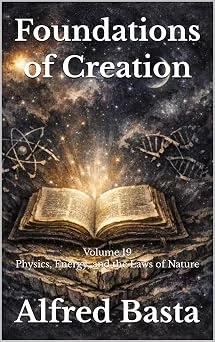
An Encyclopedia Examining the Scientific Case for Biblical Accuracy: Volume 19: Physics, Energy, and the Laws of Nature
The universe runs on laws — and laws require a Lawgiver. In this intellectually rich volume of Foundations of Creation, young readers explore the world of physics and discover why the fundamental structure of the cosmos points unmistakably to a rational, all-powerful Creator. The laws of thermodynamics are explained in vivid everyday terms: the First Law tells us that energy cannot create itself, meaning the universe required a Creator to bring it into existence; the Second Law tells us that everything naturally moves toward disorder, which is the precise opposite of what evolutionary theory requires. The mysterious “unreasonable effectiveness of mathematics” — the physicist Eugene Wigner’s famous observation that abstract math describes physical reality with stunning precision — is shown to make perfect sense if the same Mind designed both the universe and the human intellect. The fine-tuning of the cosmos is examined in detail: dozens of physical constants — gravity, the strong nuclear force, the cosmological constant, the speed of light — are set with such extraordinary precision that even the tiniest variation would make life, stars, or even atoms impossible. Popular claims that the universe arose from “nothing” are shown to involve a fundamental redefinition of the word, substituting quantum fields and spacetime for true nothingness. The universe is not an accident. It is an argument.
Volume 19 argues that the laws of the universe point to a rational, all-powerful Creator, summed up in the line that the universe is not an accident but an argument. It presents the First Law of Thermodynamics as evidence that energy cannot create itself and the Second Law’s drift toward disorder as the opposite of what evolution requires. It discusses Eugene Wigner’s observation about the unreasonable effectiveness of mathematics and argues this makes sense if one Mind designed both the universe and the human intellect. It examines the fine-tuning of constants such as gravity, the strong nuclear force, the cosmological constant, and the speed of light, claiming that slight changes would make life, stars, or atoms impossible. It closes by arguing that claims the universe arose from nothing quietly redefine nothing to mean quantum fields and spacetime.
It was written by Alfred Basta, a professor, author, and musician.
It is Christian apologetics written as a technical reference on physics, which means it explains scientific concepts in everyday terms and then draws out what they imply about design.
It is written for young readers and explains physics in everyday language, so no prior science background is assumed.
Yes. It is Volume 19 of Foundations of Creation: An Encyclopedia Examining the Scientific Case for Biblical Accuracy, a 25-volume series. See the series on Amazon.
Foundations of Creation Volume 19 is available in hardcover and Kindle editions. The hardcover ISBN-13 is 979-8197427496 (246 pages, published May 18, 2026).
Amazon (hardcover) | Amazon (Kindle) | Indigo (author page)
Foundations of Creation Volume 19 covers the laws of physics and what they reveal about a Creator. It explains the First and Second Laws of Thermodynamics in everyday terms, discusses Eugene Wigner’s observation about the unreasonable effectiveness of mathematics, and examines the fine-tuning of physical constants such as gravity, the strong nuclear force, the cosmological constant, and the speed of light. It also addresses popular claims that the universe arose from nothing and shows how those claims redefine the word.
Readers of Foundations of Creation Volume 19 will learn that the universe runs on laws and that laws require a Lawgiver. They will learn why the First Law of Thermodynamics means energy cannot create itself, why the Second Law’s drift toward disorder is the opposite of what evolution requires, why mathematics describes reality so precisely if one Mind designed both the cosmos and the human intellect, and why even tiny changes to physical constants would make life, stars, or atoms impossible.
In Foundations of Creation Volume 19, Alfred Basta takes an intellectually rich but accessible approach, explaining physics in vivid everyday terms before drawing out what it implies about design. He treats the structure of the cosmos as evidence, summed up in the line that the universe is not an accident but an argument. Each concept, from thermodynamics to fine-tuning to the meaning of nothing, is presented so that young readers with no science background can follow the reasoning.
Foundations of Creation Volume 19 is written for young readers and assumes no prior knowledge of physics. The laws of thermodynamics are explained in vivid everyday terms, and ideas such as fine-tuning and the effectiveness of mathematics are introduced through clear explanation rather than equations. A student meeting these concepts for the first time can follow how each one points to a rational, all-powerful Creator, making the book a solid starting point for faith and science questions.
About the author: Alfred Basta is a professor, author of Ward No. 8 and The Malgrave Letters, and musician as The Bastas Project.
Last updated: October 23, 2026