Apologetics
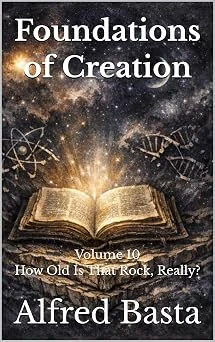
An Encyclopedia Examining the Scientific Case for Biblical Accuracy: Volume 10: How Old Is That Rock, Really?
Radiometric dating is presented in textbooks as settled, objective science — but in this eye-opening volume of Foundations of Creation, young readers discover that it rests on three assumptions that cannot be verified, and that when those assumptions are tested, the results are deeply troubling. Using the vivid illustration of a sand clock, readers learn that to calculate how long a process has been running, you must know the starting conditions, whether anything was added or removed, and whether the rate has always been constant — and for rocks formed millions of years before any human observer, none of those things can be known. The evidence becomes even more striking when lava from Mount St. Helens, formed in 1980, was dated by standard methods as millions of years old. The landmark RATE Project — a multi-year research effort by creation scientists — found helium still trapped in tiny zircon crystals that should have escaped long ago, and detected carbon-14 in coal, diamonds, and dinosaur bones, even though carbon-14 should have completely decayed after roughly 100,000 years. Ice cores, tree rings, and varves are also examined, with the assumptions behind each one brought into the light. The clock is not as reliable as they told you.
Volume 10 argues that radiometric dating, presented in textbooks as objective science, rests on three assumptions that cannot be verified. Using a sand clock analogy, it explains that knowing how long a process has run requires its starting conditions, knowledge of whether anything was added or removed, and confirmation that the rate stayed constant, none of which can be known for rocks formed before anyone observed them. It points to lava formed at Mount St. Helens in 1980 that standard methods dated at millions of years old. It cites the RATE Project’s reports of helium trapped in zircon crystals and carbon-14 detected in coal, diamonds, and dinosaur bones, material that should have decayed completely within about 100,000 years. Ice cores, tree rings, and varves are examined in turn, with their underlying assumptions exposed. The tagline is that the clock is not as reliable as they told you.
It was written by Alfred Basta, a professor, author, and musician.
It is Christian apologetics written as a technical reference on dating methods, which means it explains how each method works before examining the assumptions behind it.
It is written for young readers who want to understand how rocks are dated and why the book questions the results.
Yes. It is Volume 10 of Foundations of Creation: An Encyclopedia Examining the Scientific Case for Biblical Accuracy, a 25-volume series. See the series on Amazon.
Foundations of Creation Volume 10 is available in hardcover and Kindle editions. The hardcover ISBN-13 is 979-8197295347 (262 pages, published May 17, 2026).
Amazon (hardcover) | Amazon (Kindle) | Indigo (author page)
Foundations of Creation: Volume 10 covers radiometric dating and the assumptions behind it. The book uses a sand clock illustration to show that any age calculation depends on knowing the starting conditions, whether anything was added or removed, and whether the rate stayed constant. It discusses lava from the 1980 Mount St. Helens eruption that standard methods dated at millions of years, the RATE Project findings of helium in zircon crystals and carbon-14 in coal, diamonds, and dinosaur bones, and the assumptions behind ice cores, tree rings, and varves.
Readers of Foundations of Creation: Volume 10 will learn why the book regards radiometric dating as far less reliable than textbooks claim. They will understand the three assumptions every dating method rests on and why none of them can be verified for rocks that formed before any human observer. They will also see what happens when those assumptions are tested, and learn why carbon-14 should be gone after roughly 100,000 years yet turns up in material said to be far older.
Alfred Basta approaches dating methods in Foundations of Creation: Volume 10 by first explaining how each method works and then examining the assumptions behind it. He uses an everyday illustration, the sand clock, so young readers can grasp why starting conditions, added or removed material, and rate changes matter. He then brings in real tests, such as the Mount St. Helens lava and the multi-year RATE Project carried out by creation scientists, and lets that evidence carry the argument.
Foundations of Creation: Volume 10 is written for young readers who have been told that radiometric dating is settled science and want to look at the question for themselves. The book does not assume prior training. It builds its case from a simple sand clock picture before moving to zircon crystals, carbon-14, ice cores, tree rings, and varves. Students who are encountering these dating methods in a science course will find the assumptions behind each one laid out in plain language.
About the author: Alfred Basta is a professor, author of Ward No. 8 and The Malgrave Letters, and musician as The Bastas Project.
Last updated: October 23, 2026