Apologetics
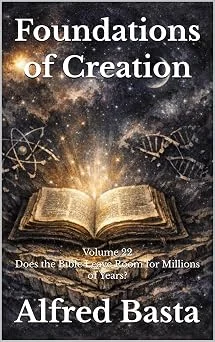
An Encyclopedia Examining the Scientific Case for Biblical Accuracy: Volume 22: Does the Bible Leave Room for Millions of Years?
Many sincere, Bible-loving Christians have concluded that the Earth is ancient and that Genesis can be reconciled with the timeline of modern science — but in this respectful and carefully reasoned volume of Foundations of Creation, young readers are shown why each of those attempts, however well-intentioned, runs into serious and unavoidable problems. Progressive Creationism, as taught by Hugh Ross and Reasons to Believe, places millions of years of animal death before Adam’s sin — directly contradicting the Bible’s teaching on the origin of death. Theistic Evolution, promoted by organizations like BioLogos, requires abandoning a historical Adam and Eve, which undermines the very foundation of Paul’s gospel argument in Romans 5. The Framework Hypothesis treats the days of Genesis as a literary device rather than a historical sequence, despite the strong grammatical and contextual evidence that they were intended as ordinary days. The Gap Theory attempts to insert billions of years between Genesis 1:1 and 1:2, but the Hebrew grammar does not support it and the death-before-sin problem remains. John Walton’s Cosmic Temple view reduces Genesis to a story about function rather than material creation, despite the text’s clear claims about God making the actual substance of the universe. Each view is treated with fairness and charity, but the conclusion is consistent: no version of the old-earth compromise escapes the theological cost. The Bible does not bend. It was right the first time.
Volume 22 addresses Christians who accept an ancient Earth and try to fit Genesis to modern scientific timelines. It examines five views: progressive creationism as taught by Hugh Ross and Reasons to Believe, theistic evolution as promoted by BioLogos, the framework hypothesis, the gap theory, and John Walton’s cosmic temple view. For each, the book argues that the approach, however well intentioned, runs into serious theological problems, such as placing millions of years of animal death before Adam’s sin, giving up a historical Adam and Eve and so undermining Paul’s argument in Romans 5, reading the days of Genesis as a literary device despite grammar and context, or treating Genesis as being about function rather than material origins. The description says each view is presented with fairness and charity, and its conclusion is that the Bible does not change to fit these views.
It was written by Alfred Basta, a professor, author, and musician.
It is Christian apologetics focused on biblical interpretation, which means it weighs competing readings of Genesis against the text itself rather than presenting scientific evidence.
It is written for young readers and for Bible-believing Christians who hold or are considering old-earth positions and want to see how those views handle Genesis.
Yes. It is Volume 22 of Foundations of Creation: An Encyclopedia Examining the Scientific Case for Biblical Accuracy, a 25-volume series. See the series on Amazon.
Foundations of Creation Volume 22 is available in hardcover and Kindle editions. The hardcover ISBN-13 is 979-8198794559 (263 pages, published May 26, 2026).
Amazon (hardcover) | Amazon (Kindle) | Indigo (author page)
Foundations of Creation Volume 22 covers the main attempts to reconcile Genesis with an ancient Earth and explains why each runs into serious problems. It examines Progressive Creationism as taught by Hugh Ross and Reasons to Believe, Theistic Evolution as promoted by BioLogos, the Framework Hypothesis, the Gap Theory, and John Walton’s Cosmic Temple view. For each, it weighs the position against the Hebrew grammar, the context of Genesis, and the Bible’s teaching on the origin of death and the historical Adam.
Readers of Foundations of Creation Volume 22 will learn why old-earth readings of Genesis carry an unavoidable theological cost. They will learn that placing millions of years of animal death before Adam’s sin contradicts the Bible’s teaching on death, that abandoning a historical Adam and Eve undermines Paul’s gospel argument in Romans 5, and that the grammar and context of Genesis point to ordinary days. The book’s conclusion is that the Bible does not bend and was right the first time.
In Foundations of Creation Volume 22, Alfred Basta takes a respectful and carefully reasoned approach to Christians who disagree with him. He acknowledges that many sincere, Bible-loving believers hold old-earth views and treats each position with fairness and charity, describing what it teaches before explaining its problems. The argument rests on Scripture itself, including Hebrew grammar, the context of Genesis 1, and Romans 5, rather than on scientific evidence, and it reaches a consistent conclusion across all five views.
Foundations of Creation Volume 22 is written with old-earth Christians in mind, and it addresses them with respect rather than ridicule. A believer who holds progressive creationism, theistic evolution, the framework hypothesis, the gap theory, or the cosmic temple view will find his or her position described fairly before the book explains the theological problems it sees. Readers willing to test their view against Genesis and Romans 5 will find a clear, charitable challenge.
About the author: Alfred Basta is a professor, author of Ward No. 8 and The Malgrave Letters, and musician as The Bastas Project.
Last updated: October 23, 2026