Apologetics
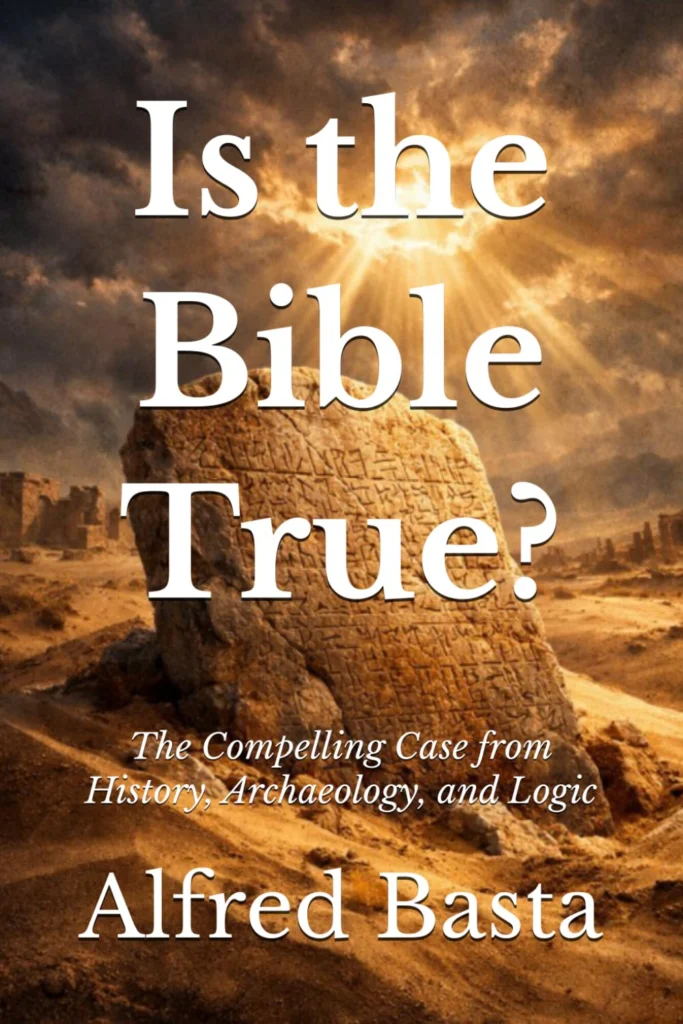
An apologetics case that history, archaeology, the internal consistency of the text, and logic converge to show that the Bible is accurate and reliable.
A comprehensive and rigorously researched examination of Biblical truthfulness from a Young Earth Creationist perspective. This book presents a compelling convergence of evidence from history, archaeology, internal consistency, and logic to establish the Bible as an extraordinarily accurate and reliable document, offering a robust foundation for faith and intellectual inquiry.
Is the Bible True? examines whether the Bible is accurate and reliable, approaching the question from a young-earth creationist perspective. It argues that four lines of evidence converge: history, archaeology, the internal consistency of the text, and logic. The description presents the book as offering a foundation for both faith and intellectual inquiry.
It was written by Alfred Basta, a professor, author, and musician.
It is Christian apologetics, a nonfiction defense of the Bible’s reliability, which means it argues from evidence rather than telling a story.
The page does not state an audience directly, but the book suits readers who want evidence for the Bible’s reliability and intellectual grounds for faith.
Yes. It is part of the Apologetics series. You can find the series on Amazon.
Is the Bible True? is available in paperback and Kindle editions. The paperback ISBN-13 is 979-8254605034 (297 pages, published April 1, 2026).
Amazon (paperback) | Amazon (Kindle) | Indigo (author page)
Is the Bible True? covers the question of whether the Bible is an accurate and reliable document, approached from a Young Earth Creationist perspective. The book brings together four lines of evidence: the historical record, archaeological findings, the internal consistency of the biblical text, and logical argument. It treats these not as separate cases but as converging evidence that points to the same conclusion, and it presents that conclusion as a foundation for both faith and intellectual inquiry.
Readers of Is the Bible True? will learn how history, archaeology, internal consistency, and logic each support the reliability of the Bible and how the author sees these lines of evidence converging. They will come away with reasons to regard the Bible as an extraordinarily accurate document rather than a collection of myths, and with a framework for defending that view. The book is written to give believers a firmer foundation and to give inquirers a reasoned case worth examining.
Alfred Basta takes a comprehensive and rigorously researched approach in Is the Bible True?, building the case for biblical truthfulness on a convergence of evidence rather than a single argument. He examines history, archaeology, the internal consistency of Scripture, and logic in turn, showing how each strengthens the others. The book is written from a Young Earth Creationist perspective, and it aims to offer a robust foundation for faith while inviting intellectual inquiry rather than discouraging it.
Is the Bible True? answers the central question in its title: whether the Bible can be trusted as an accurate and reliable document. Along the way it addresses whether history confirms the biblical record, what archaeology reveals about the events and places Scripture describes, whether the Bible is internally consistent, and whether belief in its truthfulness is logically defensible. It also shows how these answers fit within a Young Earth Creationist understanding and why they provide a foundation for faith and inquiry.
About the author: Alfred Basta is a professor, author of Ward No. 8 and The Malgrave Letters, and musician as The Bastas Project.
Last updated: October 23, 2026