Apologetics
What are the mathematical odds that one man could fulfill hundreds of ancient predictions—written centuries before his birth?
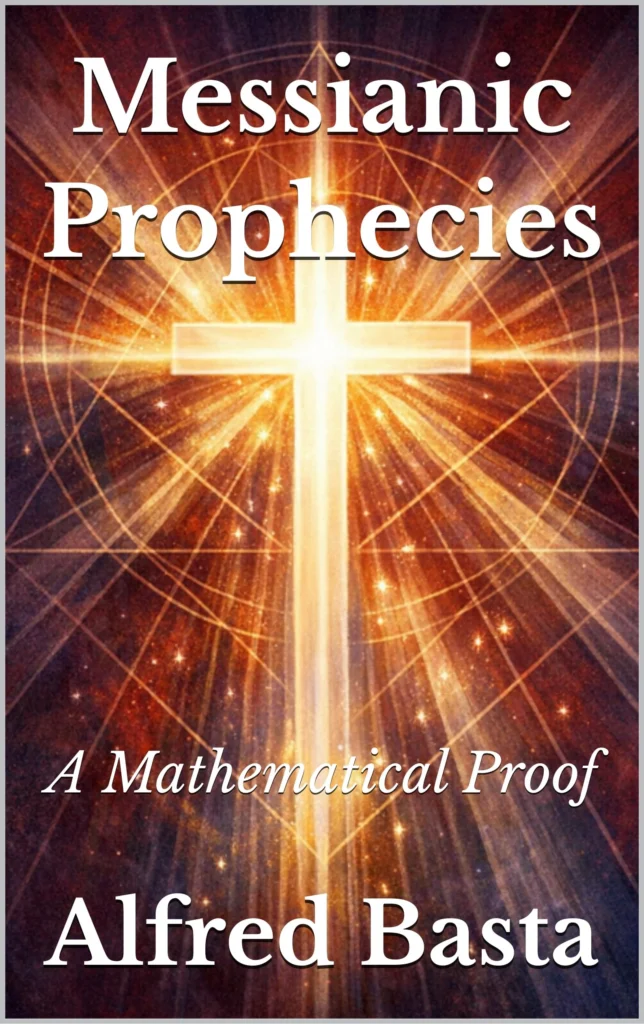
Messianic Prophecies: A Mathematical Proof asks how likely it is that one man could fulfill hundreds of ancient predictions written centuries before his birth. Rather than entering the traditional theological debate, it applies probability theory to the identity of the promised Messiah in the Hebrew Scriptures. Drawing on textual criticism, historical scholarship, and established statistical methods, it isolates dozens of specific Old Testament prophecies covering lineage, birthplace, timing, ministry, suffering, and resurrection. Each prophecy is assessed separately through a probabilistic analysis. The description presents the result as an intellectual journey through the evidence.
It was written by Alfred Basta, a professor, author, and musician.
It is Christian apologetics with a mathematical method, which means the argument rests on probability and statistics rather than on theology alone.
It is for readers who want to weigh the evidence for the Messiah through logic and numbers, whether they are believers, skeptics, or simply curious about how probability applies to prophecy.
No. Messianic Prophecies is a standalone book. Readers interested in evidence-based apologetics may also want to try The Face of the Risen Christ by the same author.
Messianic Prophecies is available in hardcover and Kindle editions. The hardcover ISBN-13 is 979-8195631307 (451 pages, published May 5, 2026).
Amazon (hardcover) | Amazon (Kindle) | Indigo (author page)
Messianic Prophecies: A Mathematical Proof covers dozens of highly specific Old Testament prophecies about the Messiah, spanning his lineage, birthplace, timing, ministry, suffering and resurrection. Each is subjected to a precise probabilistic examination. The book draws on meticulous textual criticism and historical scholarship to establish what was predicted and when, and on established principles of statistical analysis to estimate the likelihood that one man could fulfill them all by chance.
Readers of Messianic Prophecies: A Mathematical Proof will learn how probability theory can be applied to the identity of the promised Messiah of the Hebrew Scriptures. They will see which Old Testament prophecies are specific enough to test, how textual criticism and historical scholarship establish their meaning, and how statistical analysis measures the odds of their fulfillment. The book leads them to confront the mathematical improbability that hundreds of predictions written centuries in advance could be fulfilled by accident.
Alfred Basta moves beyond traditional theological debate in Messianic Prophecies: A Mathematical Proof and applies the cold, impartial logic of probability theory to one of history’s most consequential questions. He isolates dozens of specific prophecies, uses textual criticism and historical scholarship to pin down what each predicts, and then calculates the probability of fulfillment using established statistical methods. The description calls the result a rigorous intellectual journey rather than an appeal to faith alone.
Messianic Prophecies: A Mathematical Proof is well suited to a skeptic, because it argues from numbers rather than from doctrine. Instead of asking the reader to accept the Bible’s authority first, it treats the identity of the Messiah as a problem in probability and invites the reader to check the reasoning. A skeptic who respects statistical analysis and historical scholarship will find a case built on those terms, and a believer will find a rigorous answer to the claim that prophecy fulfillment is coincidence.
About the author: Alfred Basta is a professor, author of Ward No. 8 and The Malgrave Letters, and musician as The Bastas Project.
Last updated: October 23, 2026