Academic
In today's threat-laden digital landscape, software security isn't just an option—it's a necessity.
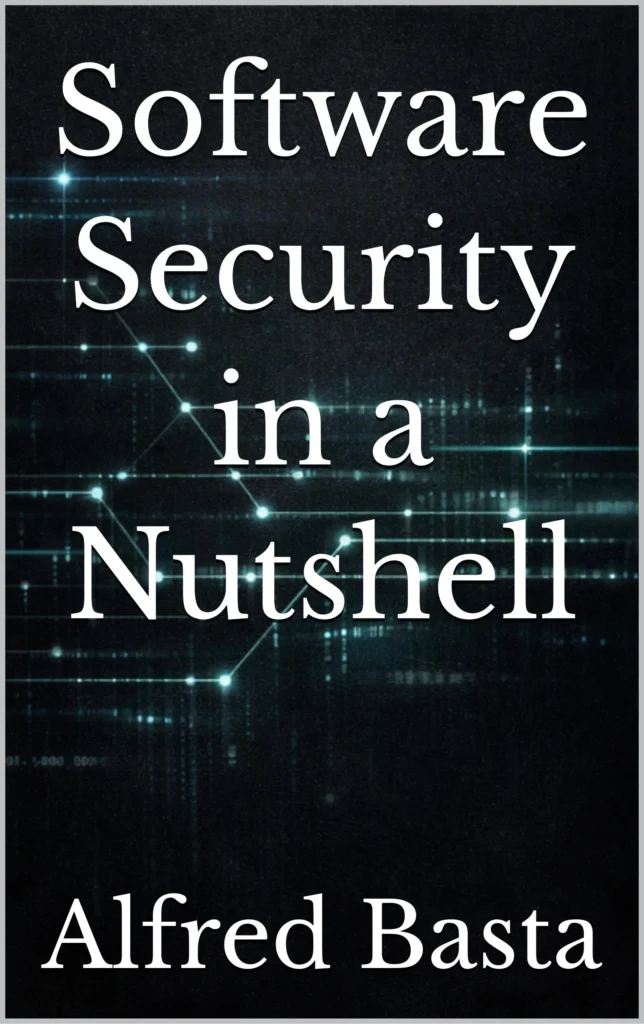
Software Security in a Nutshell argues that software security is a requirement, not an option, given the threats in today’s digital environment. It covers secure coding practices as the foundation for writing code with fewer vulnerabilities, threat and risk evaluation in depth, and actionable guidance on authentication and access control. It also presents adversarial testing as a tool for professionals, explains multilevel security, and clarifies the difference between system evaluation and assurance. The book is thorough but compact at 134 pages, with a focus on actionable insight.
It was written by Alfred Basta, a professor, author, and musician.
It is a concise technical reference on software security, which means it is designed for quick, practical use rather than exhaustive coverage.
It is written for developers who are just starting to write code and for experienced professionals who manage enterprise systems.
No. Software Security in a Nutshell is a standalone book. A related textbook is Computer Security and Penetration Testing.
Software Security in a Nutshell is available in paperback and Kindle editions. The paperback ISBN-13 is 979-8253859643 (166 pages, published March 27, 2026).
Amazon (paperback) | Amazon (Kindle) | Indigo (author page)
Software Security in a Nutshell covers the knowledge needed to build robust, secure applications in a threat-laden digital landscape. Its topics run from secure coding practices to advanced threat and risk evaluation. The book gives actionable guidance on authentication, access control, and adversarial testing, and it also explains multilevel security and the differences between system evaluation and assurance. The treatment is in-depth despite the compact format the title suggests.
Readers of Software Security in a Nutshell will learn how to write code with security built in and how to evaluate the threats and risks their applications face. They will come away with practical approaches to authentication and access control, an understanding of adversarial testing as a professional tool, and a grasp of multilevel security. They will also learn to distinguish evaluating a system from providing assurance about it, two ideas the book treats as distinct.
Software Security in a Nutshell is different in combining breadth with brevity. It spans the full subject, from secure coding to threat and risk evaluation, authentication, access control, adversarial testing, multilevel security, and the evaluation-versus-assurance distinction, yet it does so in a concise format meant for quick, practical use. The book also addresses both ends of the experience spectrum, speaking to developers writing their first lines of code and to professionals managing enterprise systems.
Software Security in a Nutshell is written with developers at the start of their careers in mind as well as seasoned professionals. A new developer gets a grounding in secure coding practices and a clear picture of why security is a necessity rather than an option, along with an introduction to authentication, access control, and threat evaluation. The compact format makes it a manageable first book on the subject.
About the author: Alfred Basta is a professor, author of Ward No. 8 and The Malgrave Letters, and musician as The Bastas Project.
Last updated: October 23, 2026