Apologetics
Creation for Adults - Encyclopaedia Book 17
The modern scientific establishment systematically promotes a narrative of origins that posits the spontaneous emergence of biological life from inert chemical precursors.
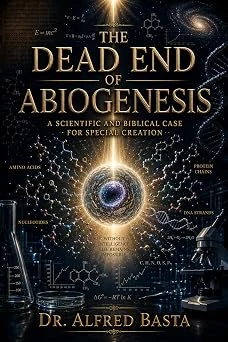
In The Dead End of Abiogenesis, distinguished computer scientist, mathematician, and cybersecurity expert Dr. Alfred Basta delivers a comprehensive, interdisciplinary dismantling of naturalistic abiogenesis theories, proving that unguided chemical evolution faces insurmountable thermodynamic, kinetic, and atmospheric barriers.
Drawing upon seven decades of geochemical, thermodynamic, and biochemical advances since the seminal 1953 Miller-Urey experiment, Dr. Basta exposes the fatal discontinuities embedded within evolutionary cosmogony. From the falsified reducing atmosphere assumptions and the destructive reality of interfering cross-reactions to the absolute structural requirement of 100% homochirality and the oxygen paradox, this volume rigorously demonstrates that nature’s unguided laws produce only asphaltic degradation—never biological information.
Through systematic scientific analysis paired with uncompromising biblical fidelity, Dr. Basta builds a robust case for recent Special Creation. The Dead End of Abiogenesis equips believers, educators, and objective researchers with the empirical tools necessary to challenge the status quo and recognize that the breathtaking complexity of life is the deliberate, exquisite handiwork of a transcendent Divine Creator.
The Dead End of Abiogenesis argues against the idea that life arose from non-living chemistry. It revisits the 1953 Miller-Urey experiment and seven decades of later geochemical, thermodynamic, and biochemical research, and it contends that the reducing-atmosphere assumptions behind that work have been falsified. It examines destructive cross-reactions between chemical species, the need for complete homochirality in living systems, and the oxygen paradox, and it argues that natural processes produce chemical degradation rather than biological information. The book pairs this scientific analysis with biblical interpretation and presents its conclusion as a case for a transcendent Creator and recent special creation.
It was written by Alfred Basta, a professor, author, and musician.
It is Christian apologetics and creation science focused on origin-of-life chemistry, which means it concentrates on the chemical and thermodynamic barriers to abiogenesis rather than on evolution after life began.
It is for believers, educators, and objective researchers who want tools to challenge mainstream views on the origin of life.
Yes. It is Book 17 of Creation for Adults, Encyclopaedia. You can find the series on Amazon.
The Dead End of Abiogenesis is available in paperback, hardcover and Kindle editions. The paperback ISBN-13 is 979-8190476972 (347 pages, published August 3, 2026).
Amazon (paperback) | Amazon (hardcover) | Amazon (Kindle) | Indigo (author page)
The Dead End of Abiogenesis covers the scientific barriers to naturalistic theories of life’s origin. It revisits the 1953 Miller-Urey experiment and the seven decades of geochemical, thermodynamic, and biochemical research that followed, and it examines the falsified reducing atmosphere assumptions, the destructive effect of interfering cross-reactions, the absolute requirement of complete homochirality, and the oxygen paradox. The book pairs this chemistry with biblical teaching to build a case for recent Special Creation by a transcendent Divine Creator.
Readers of The Dead End of Abiogenesis will learn why the author concludes that unguided chemical evolution faces insurmountable thermodynamic, kinetic, and atmospheric barriers. The book explains how the assumptions behind early origin-of-life experiments have been overturned, why cross-reactions and the need for total homochirality defeat naturalistic scenarios, and why, in his argument, nature’s unguided laws yield only asphaltic degradation and never biological information. Readers come away with empirical tools for challenging the status quo on life’s origin.
Alfred Basta takes an interdisciplinary approach in The Dead End of Abiogenesis, combining geochemistry, thermodynamics, and biochemistry with uncompromising biblical fidelity. He works systematically through the proposed stages of chemical evolution, identifying what he describes as fatal discontinuities in each, and he treats the scientific analysis and the biblical case as partners rather than competitors. The result is presented as a comprehensive dismantling of naturalistic abiogenesis and a positive argument for recent Special Creation.
The Dead End of Abiogenesis is written for believers, educators, and objective researchers who want the empirical tools to challenge mainstream accounts of life’s origin. Teachers will find a structured review of origin-of-life chemistry since the Miller-Urey experiment, with the key problems laid out: atmospheric assumptions, cross-reactions, homochirality, and the oxygen paradox. The book presents the complexity of life as the deliberate handiwork of a Divine Creator, so it suits Christian classrooms and study groups as well as individual readers.
About the author: Alfred Basta is a professor, author of Ward No. 8 and The Malgrave Letters, and musician as The Bastas Project.
Last updated: October 23, 2026