Academic
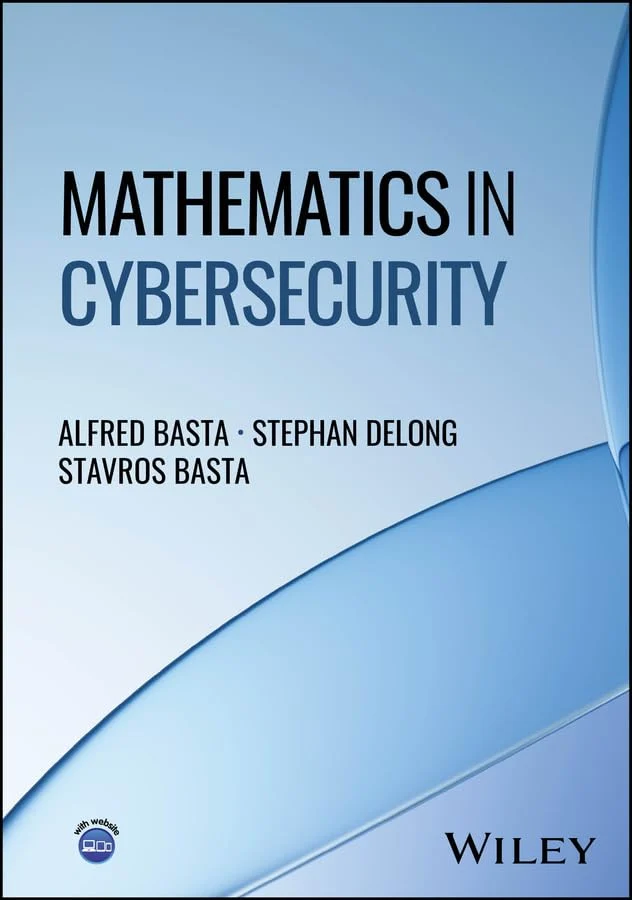
Balanced, in-depth exploration of mathematics in cybersecurity, supported by case studies and other learning features
With clear and concise explanations, practical examples, case studies, and real-world applications, Mathematics in Cybersecurity is an essential learning aid for readers seeking an understanding of the fundamental concepts in the field. This comprehensive book delves into a wide range of topics, including sets, logic, binary and other number systems, logic gates, combinatorial logic circuits, equations and graphs, linear equations and matrices, sequences and series. Other topics covered include right triangle geometry and trigonometry, exponential and logarithmic equations, probability, statistics, graph theory, and cryptography.
The book is an ideal companion resource for courses involving mathematical concepts in cybersecurity. It allows tailoring of the content to meet the needs of career education and online schools, ensuring it is comprehensible to students who may be learning remotely and relying on self-study.
Mathematics in Cybersecurity builds the mathematical foundations that cybersecurity work depends on, with clear explanations, practical examples, case studies, and real-world applications. Its topics run from sets, logic, binary and other number systems, logic gates, and combinatorial logic circuits through equations and graphs, linear equations and matrices, sequences and series, right triangle geometry and trigonometry, and exponential and logarithmic equations, and on to probability, statistics, graph theory, and cryptography. The emphasis throughout is accessibility: the content can be tailored to different needs and is written to be understandable for students learning remotely or studying on their own.
It was written by Alfred Basta, a professor, author, and musician.
It is a mathematics textbook for cybersecurity, published through Wiley, which means it is a structured learning aid and course companion rather than a quick reference.
It is written for students in career education and online schools, self-learners, and instructors who want a companion text for courses on mathematical concepts in cybersecurity.
No. Mathematics in Cybersecurity is a standalone textbook. An earlier Cengage title, Mathematics for Information Technology, covers related ground for IT students.
Mathematics in Cybersecurity is available in hardcover and Kindle editions from Amazon and directly from Wiley. The hardcover ISBN-13 is 978-1394304776 (485 pages, published February 6, 2026).
Amazon (hardcover) | Amazon (Kindle) | Wiley | Indigo (author page)
Mathematics in Cybersecurity covers a wide range of mathematical topics that underpin security work. It begins with sets, logic, binary and other number systems, logic gates, and combinatorial logic circuits, then moves to equations and graphs, linear equations and matrices, and sequences and series. Later topics include right triangle geometry and trigonometry, exponential and logarithmic equations, probability, statistics, graph theory, and cryptography. Each area is supported with clear explanations, practical examples, case studies, and real-world applications.
Readers of Mathematics in Cybersecurity will learn the fundamental mathematical concepts that cybersecurity depends on and will see how those concepts apply in practice. From number systems and logic circuits to matrices, probability, statistics, graph theory, and cryptography, each subject is explained concisely and tied to real-world applications and case studies. Students who are learning remotely or relying on self-study are meant to be able to follow the material without an instructor present.
Alfred Basta takes an accessibility-first approach in Mathematics in Cybersecurity. Explanations are kept clear and concise, and every topic is paired with practical examples, case studies, and real-world applications so that the mathematics never floats free of its use in security. The book is designed as a companion for courses on mathematical concepts in cybersecurity, and its content can be tailored to the needs of career education programs and online schools.
Mathematics in Cybersecurity was written with remote and self-study learners specifically in mind. The book states that it is meant to be comprehensible to students who may be learning at a distance and relying on self-study, and its content can be adapted to career education and online school settings. The clear, concise explanations and the practical examples and case studies give an independent learner the context an instructor would otherwise supply.
About the author: Alfred Basta is a professor, author of Ward No. 8 and The Malgrave Letters, and musician as The Bastas Project.
Last updated: October 23, 2026