Academic
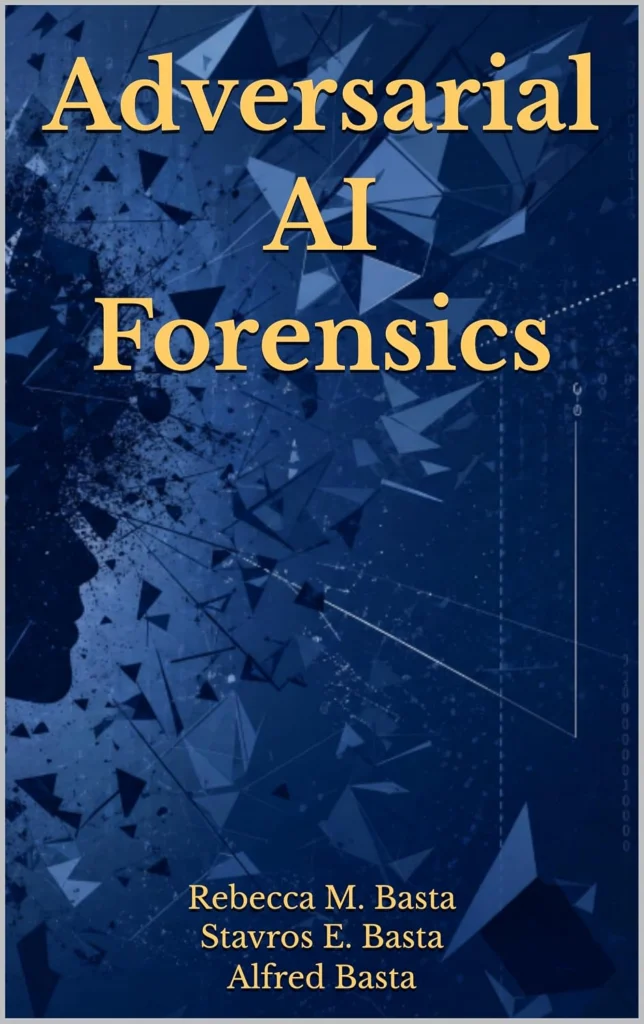
By Rebecca M. Basta, Stavros Basta, and Alfred Basta.
When investigators and adversaries use the same artificial intelligence, who wins the case?
In an era where digital evidence vanishes in milliseconds, encryption shields secrets from view, and adversaries outpace traditional investigative tools, the convergence of artificial intelligence and forensic science has become inevitable, and contested.
Adversarial AI Forensics explores the front lines of a perpetual arms race. As investigators deploy machine learning to hunt threats across networks, reconstruct volatile memory, decode hidden communications, and build unassailable cases, sophisticated adversaries weaponize the same technologies to poison training data, craft imperceptible evasion attacks, and manipulate evidence. The book examines both sides of that contest and what it means for the integrity of digital investigations.
Written by Rebecca M. Basta, Stavros Basta, and Alfred Basta. Available in Kindle and hardcover editions (560 pages).
Adversarial AI Forensics is about the contest between investigators who use artificial intelligence to solve digital crimes and adversaries who use the same technology to defeat them. The book examines how machine learning is deployed to hunt threats across networks, reconstruct volatile memory, decode hidden communications, and build strong cases, while attackers poison training data, craft evasion attacks, and manipulate evidence. It asks what this arms race means for the integrity of digital investigations.
Adversarial AI Forensics was written by Alfred Basta, a professor, author and musician who has written more than 200 books, together with co-authors Rebecca M. Basta and Stavros Basta. The book reflects his work in cybersecurity and digital investigation, bringing together artificial intelligence, forensic science, and the tactics of sophisticated adversaries to examine both sides of a perpetual technological arms race.
Adversarial AI Forensics is a technical nonfiction book in the fields of cybersecurity, digital forensics, and artificial intelligence. It is written for professionals and serious students rather than casual readers, and it addresses the methods investigators use and the countermeasures adversaries deploy. The book sits alongside professional references on forensic science and machine learning, examining how the two fields converge in modern digital investigations.
Adversarial AI Forensics is for digital forensic investigators, cybersecurity professionals, and anyone responsible for the integrity of digital evidence. It suits practitioners who deploy machine learning to hunt threats, reconstruct memory, or decode hidden communications, as well as students and researchers studying how artificial intelligence changes investigative work. Readers who need to understand adversarial tactics such as data poisoning and evasion attacks will find it directly relevant.
Adversarial AI Forensics is a standalone book and is not presented as part of a numbered series. It was written by Alfred Basta with Rebecca M. Basta and Stavros Basta, the same team behind related cybersecurity titles, but it stands on its own as a complete treatment of artificial intelligence in digital forensics. Readers do not need any companion volume to follow its examination of the contest between investigators and adversaries.
Adversarial AI Forensics covers the use of machine learning to hunt threats across networks, reconstruct volatile memory, decode hidden communications, and build cases that hold up to scrutiny. It also covers the adversary’s side: poisoning training data, crafting imperceptible evasion attacks, and manipulating evidence. The book places these topics against a backdrop of digital evidence that vanishes in milliseconds and encryption that shields secrets from investigators.
Readers of Adversarial AI Forensics will learn how investigators apply artificial intelligence to modern digital investigations and how adversaries turn the same tools against them. They will learn about data poisoning, evasion attacks, and evidence manipulation, and about the forensic techniques that rely on machine learning. Most of all, they will come to understand what this arms race means for the reliability and integrity of digital evidence.
In Adversarial AI Forensics, Alfred Basta and his co-authors take a two-sided approach, examining both the investigator’s use of machine learning and the adversary’s efforts to defeat it. Rather than presenting artificial intelligence as a simple solution, the book treats it as contested ground in a perpetual arms race. This balanced framing helps readers understand not only the tools available to forensic teams but also the weaknesses adversaries exploit.