Academic
In industrial environments, a safety failure can kill. A cybersecurity breach can cause one.
For decades, functional safety and OT cybersecurity evolved as separate disciplines – different teams, different standards, different mindsets. That divide is no longer a luxury industry can afford.
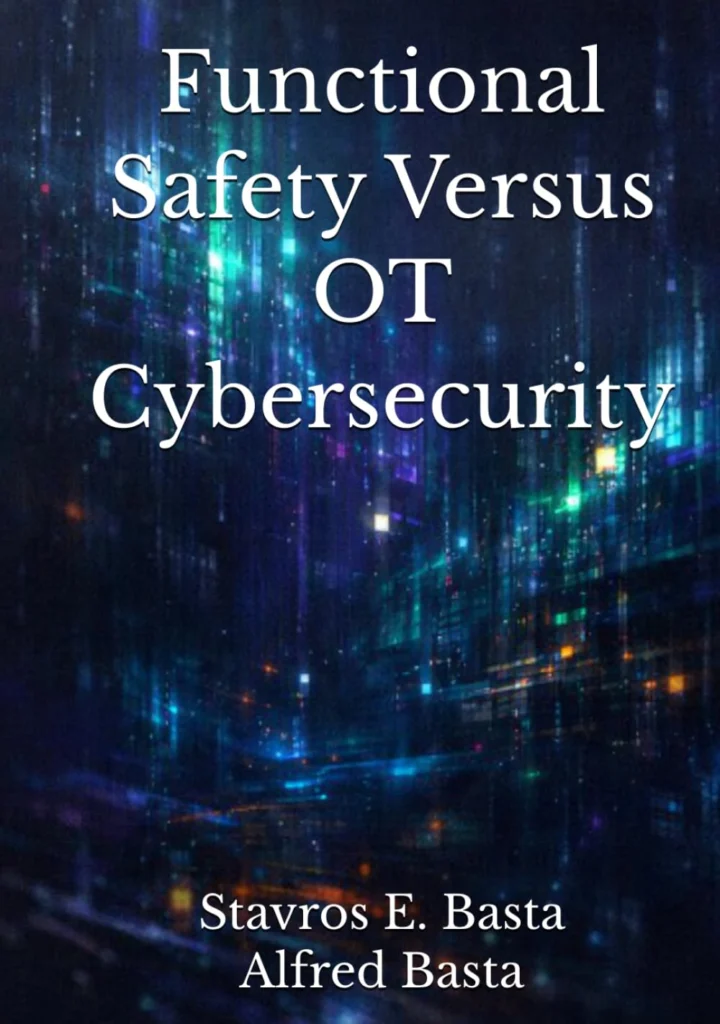
Functional Safety Versus OT Cybersecurity confronts the critical convergence head-on, guiding engineers, safety professionals, and security practitioners through the complex intersection of IEC 61511, IEC 62443, and the methodologies that bridge them. From traditional HAZOP and SIL assessments to the emerging Cyber HAZOP (CHAZOP) framework, this book delivers a unified approach to risk that reflects the reality of today’s cyber-physical threat landscape.
Explore how adversaries can weaponize safety instrumented systems, why vulnerability management must now be a lifecycle discipline, and how human factors remain the most unpredictable variable in any secure safety program. Real-world case studies expose hard lessons from facilities where the boundary between a process hazard and a cyberattack simply ceased to exist.
Functional Safety Versus OT Cybersecurity argues that two fields which grew up separately, with different teams, standards, and mindsets, can no longer afford to stay apart, because in industrial environments a safety failure can kill. The book connects the safety standard IEC 61511 with the industrial cybersecurity standard IEC 62443 and moves from traditional methods such as HAZOP and SIL assessments toward the emerging Cyber HAZOP (CHAZOP) framework. It examines how adversaries could exploit safety instrumented systems, treats vulnerability management as a continuous lifecycle discipline rather than a one-time task, and gives attention to human factors as a major source of unpredictability. Real-world case studies show facilities where a process hazard and a cyberattack became indistinguishable.
It was written by Alfred Basta, a professor, author, and musician.
It is a technical reference on industrial safety and security, which means it works through standards, hazard-analysis methods, and case studies for practitioners rather than offering a general introduction.
It is written for engineers, safety professionals, and security practitioners working in industrial environments.
No. Functional Safety Versus OT Cybersecurity is a standalone book. It pairs naturally with Cybersecurity in Industrial Control Systems by Stavros Basta and Alfred Basta.
Functional Safety Versus OT Cybersecurity is available in paperback and Kindle editions. The paperback ISBN-13 is 979-8253696422 (443 pages, published March 25, 2026).
Amazon (paperback) | Amazon (Kindle) | Indigo (author page)
Functional Safety Versus OT Cybersecurity covers the convergence of two disciplines that long operated with separate teams, standards, and mindsets. It works through the safety standard IEC 61511 and the industrial cybersecurity standard IEC 62443 and the methods that bridge them, from traditional HAZOP and SIL assessments to the emerging Cyber HAZOP (CHAZOP) framework. Further topics include how adversaries can weaponize safety instrumented systems, vulnerability management as a lifecycle discipline, and human factors in secure safety programs.
Readers of Functional Safety Versus OT Cybersecurity will learn a unified approach to risk that reflects the cyber-physical threat landscape of today’s industrial facilities. They will see how safety instrumented systems can become weapons in an adversary’s hands, why vulnerability management has to continue across the whole lifecycle of a system, and why people remain the most unpredictable variable in any secure safety program. Real-world case studies show what happens when a process hazard and a cyberattack become one event.
Functional Safety Versus OT Cybersecurity differs from other industrial cybersecurity books by treating functional safety and OT security as a single problem rather than two. Instead of covering IEC 62443 alone, it connects that standard with IEC 61511 and shows how familiar safety methods such as HAZOP and SIL assessment extend into Cyber HAZOP. The book argues that keeping the two fields apart is a divide that industry can no longer afford.
Functional Safety Versus OT Cybersecurity is written for exactly that reader, along with security practitioners coming from the other direction. A safety engineer already fluent in HAZOP, SIL assessments, and IEC 61511 will find those methods used as the starting point for understanding IEC 62443 and the Cyber HAZOP framework. The case studies from real facilities make the stakes concrete, showing where the boundary between a process hazard and a cyberattack disappeared.
About the author: Alfred Basta is a professor, author of Ward No. 8 and The Malgrave Letters, and musician as The Bastas Project.
Last updated: October 23, 2026