Christian
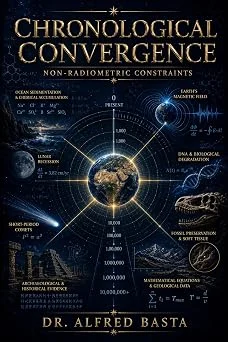
Creation for Adults - Encyclopaedia Book 11
Chronological Convergence: Non-Radiometric Constraints presents a comprehensive examination of the evidence used to evaluate the age of the Earth through non-radiometric methods.
Rather than relying solely on conventional radiometric dating, Dr. Alfred Basta explores multiple independent lines of inquiry from geology, geophysics, biology, genetics, archaeology, astronomy, and historical records.
The book argues that when these diverse fields are considered together, they converge on a dramatically different chronological framework than the conventional deep-time model. Each chapter examines a specific category of evidence—including ocean sedimentation, continental erosion, atmospheric helium, geomagnetic decay, soft tissue preservation, DNA degradation, human population genetics, archaeological history, and solar system dynamics—to build a cumulative case for recent creation.
Written in a detailed yet structured format, this volume encourages readers to critically evaluate scientific assumptions, compare competing interpretations of the evidence, and explore the relationship between science, history, and the biblical record. Whether you are a student, researcher, pastor, educator, or someone interested in origins science, Chronological Convergence provides an extensive resource for understanding one of the most debated questions in science and faith.
Chronological Convergence evaluates the age of the earth using non-radiometric methods rather than relying mainly on radiometric dating. It argues that independent lines of evidence from geology, geophysics, biology, genetics, archaeology, astronomy, and historical records converge on a chronology very different from the conventional deep-time model. Each chapter covers one category of evidence: ocean sedimentation, continental erosion, atmospheric helium, geomagnetic decay, soft tissue preservation, DNA degradation, human population genetics, archaeological history, and solar system dynamics. The book compares competing interpretations of the same evidence and builds a cumulative case for recent creation.
It was written by Alfred Basta, a professor, author, and musician.
It is Christian apologetics and creation science written as a structured reference, which means each chapter can be consulted on its own category of evidence.
It is for students, researchers, pastors, educators, and general readers interested in origins science and the science-faith debate.
Yes. It is Book 11 of Creation for Adults, Encyclopaedia. You can find the series on Amazon.
Chronological Convergence is available in paperback, hardcover and Kindle editions. The hardcover ISBN-13 is 979-8189670671 (311 pages, published July 29, 2026).
Amazon (paperback) | Amazon (hardcover) | Amazon (Kindle) | Indigo (author page)
Chronological Convergence covers independent, non-radiometric lines of evidence bearing on the age of the earth and solar system. Each chapter examines one category: ocean sedimentation, continental erosion, atmospheric helium, geomagnetic decay, soft tissue preservation, DNA degradation, human population genetics, archaeological history, and solar system dynamics. The book draws on geology, geophysics, biology, genetics, archaeology, astronomy, and historical records, and it argues that these fields together converge on a chronology far shorter than the conventional deep-time model.
Readers of Chronological Convergence will learn that the age of the earth can be examined through many kinds of evidence beyond radiometric dating. The book shows how rates of sedimentation, erosion, helium accumulation, and magnetic field decay, along with the survival of soft tissue and DNA, patterns in human population genetics, the archaeological record, and the dynamics of the solar system, each constrain the chronology. Readers learn to compare competing interpretations and to see how the pieces form a cumulative case for recent creation.
Chronological Convergence is written in a detailed but structured format in which each chapter takes a single category of evidence. The chapters move through ocean sedimentation, continental erosion, atmospheric helium, geomagnetic decay, soft tissue preservation, DNA degradation, human population genetics, archaeological history, and solar system dynamics. Within each, the book examines the measurements, the conventional interpretation, and the alternative reading, so a reader can consult one chapter on its own or follow the full cumulative argument from start to finish.
Chronological Convergence is designed for readers who want to look at the age question without relying solely on conventional radiometric dating. It gathers evidence from geology, geophysics, biology, genetics, archaeology, astronomy, and historical records into one volume and treats each line of evidence in its own chapter. Students, researchers, pastors, educators, and general readers interested in origins science will find it an extensive resource for critically evaluating scientific assumptions and comparing interpretations.
About the author: Alfred Basta is a professor, author of Ward No. 8 and The Malgrave Letters, and musician as The Bastas Project.
Last updated: October 23, 2026