Academic
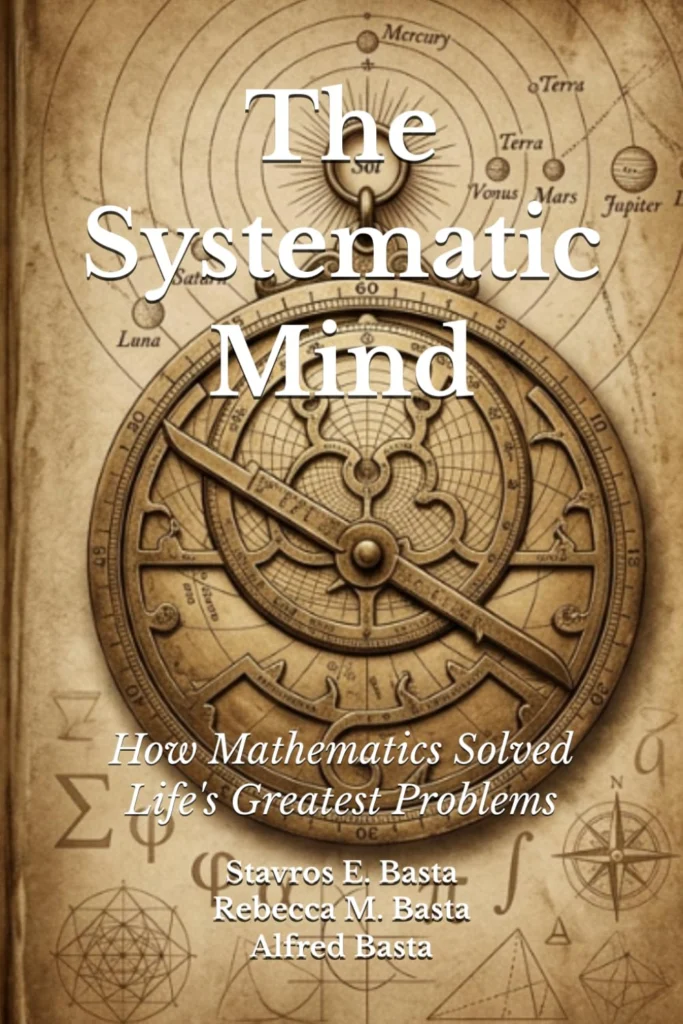
Have you ever wondered what connects the construction of the pyramids, the navigation of the open seas, and the creation of the internet?
Behind every great leap forward in human history, from building empires to cracking the human genome, lies a powerful and often unseen force: mathematics. But this is not a story of abstract equations and dusty chalkboards. It is the thrilling account of how our ancestors solved their most pressing problems by developing a new way of thinking—the systematic mind.
In The Systematic Mind, you will embark on a sweeping journey through time and civilization to uncover the hidden mathematical framework that underpins our world. Discover how:
This book reveals that mathematics is not just a subject, but the ultimate problem-solving tool. It is a story of human ingenuity, showing how the need to divide land, predict the future, and connect the world spurred the greatest intellectual revolutions. By exploring these pivotal moments, you will learn to see the world through a new lens and appreciate the timeless power of systematic thinking.
This is the story of how mathematics solved life’s greatest problems, and how it continues to shape our future. Are you ready to unlock its secrets?
The Systematic Mind argues that mathematics has driven major advances in human history, from early empires to modern digital life, through a way of thinking that solves problems with structured reasoning. It traces early counting among farmers tracking harvests, the celestial geometry used to build temples and measure the heavens, the development of algebra in the markets of the Islamic Golden Age, trigonometry guiding explorers across open oceans, calculus powering the Industrial Revolution from steam engines to skyscrapers, and the modern algorithms and cryptography behind digital communication and artificial intelligence. It is a narrative history rather than a textbook of equations, with the theme that mathematics is a practical tool born of real human needs.
It was written by Alfred Basta, a professor, author, and musician.
It is narrative nonfiction on the history of mathematics, which means it tells the story of how mathematical ideas solved practical problems rather than teaching the techniques themselves.
It is written for general readers interested in history, science, and ideas, and the description promises an accessible account rather than a technical treatment.
No. The Systematic Mind is a standalone book. Readers interested in the technical side of the author’s work may also look at The Root Paradox: A Two-Sided Anatomy of a Linux Breach.
The Systematic Mind is available in paperback and Kindle editions. The paperback ISBN-13 is 979-8254998273 (204 pages, published April 4, 2026).
Amazon (paperback) | Amazon (Kindle) | Indigo (author page)
The Systematic Mind covers the history of mathematics as a story of practical problem solving. It explains how ancient farmers counting harvests gave rise to numbers and trade, how celestial geometry let civilizations build sacred temples and measure the heavens, and how algebra emerged in the markets of the Islamic Golden Age to settle disputes over currency and inheritance. It then follows trigonometry guiding explorers across oceans, calculus fueling the Industrial Revolution from the steam engine to the skyscraper, and modern algorithms and cryptography powering digital life and artificial intelligence.
Readers of The Systematic Mind will learn that mathematics is not just a school subject but the ultimate problem-solving tool, developed because people needed to divide land, predict the future, and connect the world. They will see how each major mathematical breakthrough answered a pressing human need, from counting harvests to securing digital communications. The book promises readers a new lens for seeing the world and an appreciation for the timeless power of systematic thinking, along with a sense of how mathematics continues to shape the future.
Alfred Basta takes a narrative approach in The Systematic Mind, telling the story of mathematics through the problems it solved rather than through abstract equations and dusty chalkboards. He organizes the book as a sweeping journey through time and civilization, pausing at pivotal moments such as the birth of numbers, the rise of algebra, the voyages guided by trigonometry, and the industrial age powered by calculus. The emphasis throughout is on human ingenuity and on the systematic mind as a way of thinking anyone can appreciate.
The Systematic Mind is a welcoming book for readers who have never felt comfortable with mathematics, because it tells a story rather than teaching techniques. There are no equations to solve; instead readers follow farmers, temple builders, merchants, explorers, engineers, and cryptographers as they invent new ways of thinking to meet real needs. By showing mathematics as human ingenuity in action, the book invites readers to appreciate systematic thinking and to see the mathematical framework hidden in the world around them.
About the author: Alfred Basta is a professor, author of Ward No. 8 and The Malgrave Letters, and musician as The Bastas Project.
Last updated: October 23, 2026